headline
Sam Johnstone Exclusive: The Sum Of All The Parts
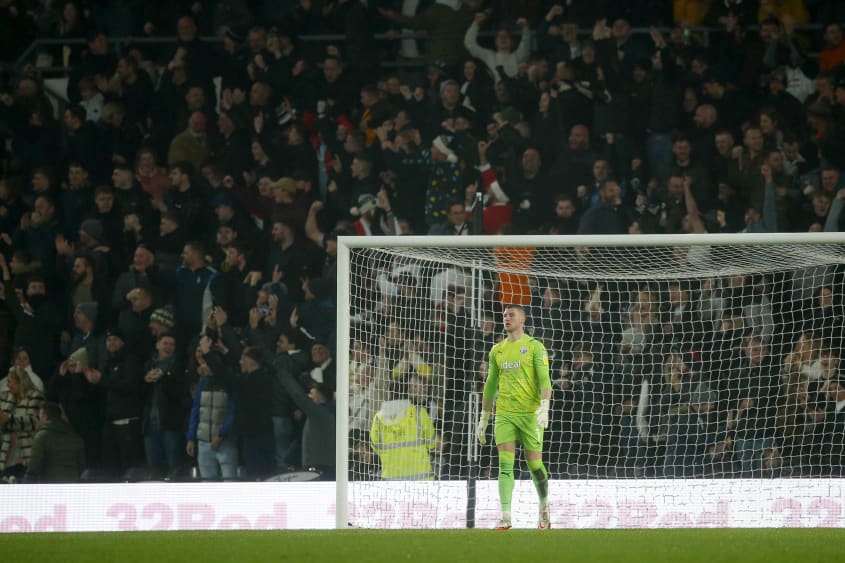
Becoming a Premier League goalkeeper is no mean feat. Sometimes, football fans forget that.
Patiently waiting for that opportunity for seven years at one of the biggest clubs in the world is a whole other dynamic. Throw in a few loan spells, two Play-Off Finals, a transfer saga surrounding one of the game’s greatest shot-stoppers, and an eye on a spot in the national team, and you’ve briefly described the career so far of Crystal Palace’s Sam Johnstone.
Johnstone, 29, has experienced the different tiers of the English game in a unique way. From his formative years under Sir Alex Ferguson, to the a first taste of silverware at boyhood club Preston, onto a promotion heartbreak and promotion success, and - who could forget - being scored against by none other than Alisson Becker, Johnstone’s time between the sticks has formed an interesting path that, perhaps, has gone somewhat under the radar.
“To become Manchester United’s number one was, obviously, a dream as a kid. As you know, the record isn't great for United in terms of bringing through too many home grown goalkeepers”, says Johnstone, looking back on his time with the Red Devils.
“Richard Hartis [United’s current 1st Team Goalkeeper Coach] helped me a lot growing up. Having patience was a key thing, and driving home the basics driven then was also key. When I was younger, I actually wasn’t great diving to my left, and we would go over that constantly.
“Once you turn a scholar, you begin going away to tournaments abroad, flying, staying in hotels and travelling. That’s a big part of the learning experience too”, he continues.
“The thing about United is that they can bring in a lot of good players at any time. I had to really knuckle down and be on it when I turned pro and entered the first team environment. In the early days, I was alongside the likes of Edwin van der Sar, Tomas Kuszczak and Ben Foster. When David De Gea came in, I eventually moved fully into the first team dressing room to work with him.
“The quality of that dressing room…you had to be on it every day!”, remarks Johnstone. “Under Sir Alex [Ferguson] and the senior players in the squad, you realise how professional they are and how much they want to win every day. That puts pressure on a young goalkeeper to be engaged and make sure you're on form. If you're not, they'll be quick to tell you”.
By 2015, the United squad of Johnstone’s youth days was beginning to break apart. David De Gea was in turbulent transfer waters. The Spaniard had been strongly linked with a move to Real Madrid over the summer transfer window, coming off the back of two underwhelming seasons. In 2013/14, now Ferguson-less, United had finished 7th under David Moyes, and then Ryan Giggs, before making the Champions League with Louis Van Gaal the following season.
With De Gea’s move seemingly moving closer and closer, Johnstone was simultaneously getting closer to the number one spot at Old Trafford. Victor Valdes had seemingly fallen out of favour with Van Gaal, and his big break with United appeared to be nearing.
“I’d just been promoted with Preston the previous season - my hometown club. They may have been a couple of leagues below, but the pressure is still there. You're still at a good level, and expected to win every week. It’s not only that, but you’ve got family and friends watching and counting on you, too.
“We’d been to the USA for a pre-season camp and I ended up playing a few games. I did well in the games I played”, explains the 29-year-old.
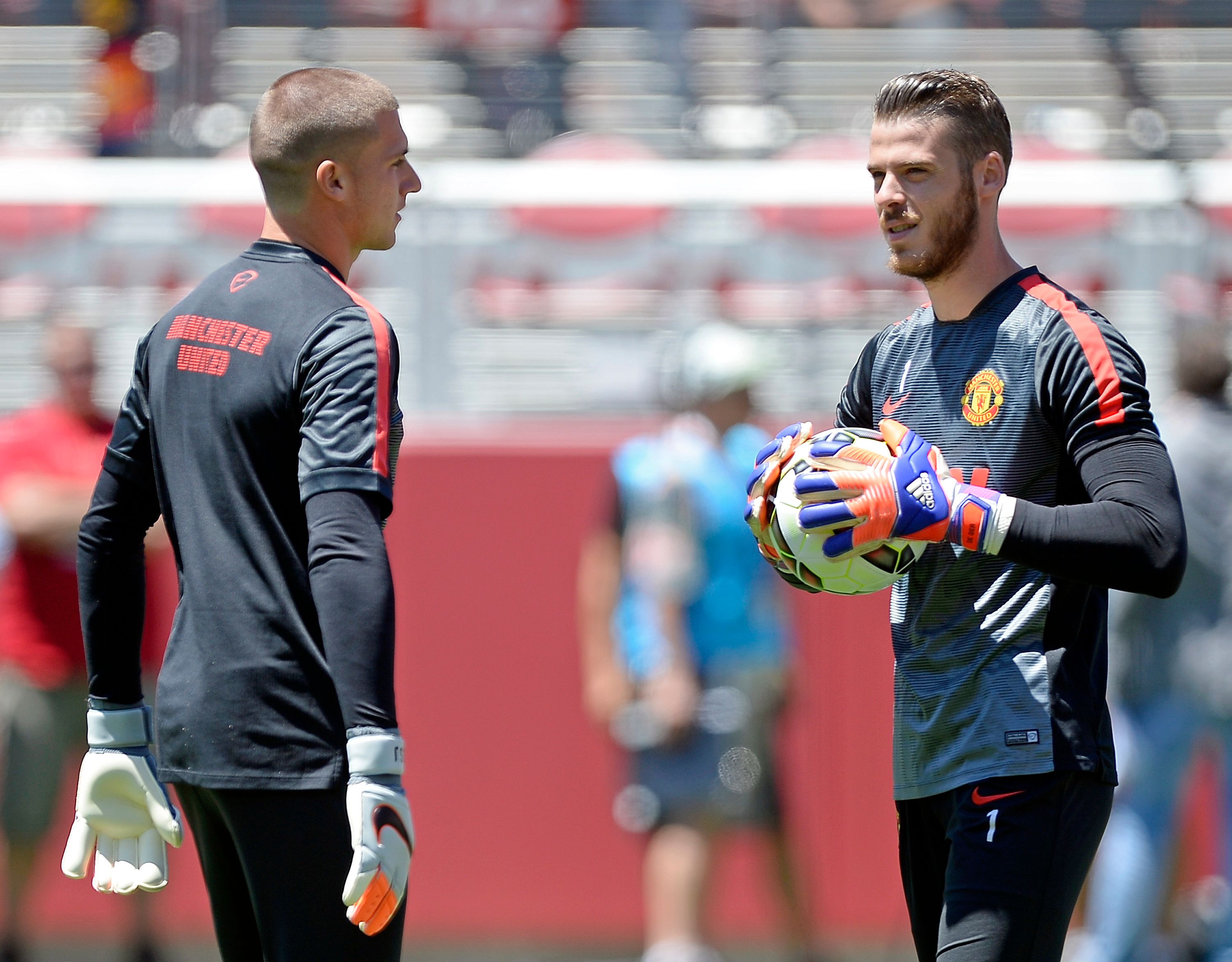
Johnstone started against San Jose Earthquakes and Club America, before coming on as a second half substitute against Barcelona with United winning 3-1.
“The next thing I know is that Van Gaal has brought in Sergio Romero. Sergio is a great guy and a great goalkeeper, but when you’re so close to playing the first game of the season at home, that was difficult”.
Indeed, Johnstone would have walked out on the first day of the 2015/16 season in United’s starting line up had Romero not signed. With De Gea out of the squad as the rumours continued to swirl, Romero was named ahead of the then-22 year old for the 1-0 win against Tottenham Hotspur.
“And that was just the situation. It just wasn’t meant to be”, he continues.
“I feel my time with United was one where things just didn’t quite click. To have made my full debut that day would have been unbelievable. But I don’t get upset about it or dwell on it. I moved on elsewhere”.
*
Growing up as a goalkeeper is a life experience as much as a sporting one. Learning resilience takes many different forms.
Johnstone’s teenage years were largely spent away from home, living with a host family in Manchester. The sacrifices that players make from an early age bring rewards that most young players could only dream of, but scarcely make news headlines despite being an integral part of a professional’s formative years.
“I was 15 when I left home to move in with our landlady Lynn. It was me and Zeki Fryers. We started with a family that were doing it for the first time, but had two young kids and it didn't quite work out so we then moved. We lived with Lynn from 15 to around 21.
“She could be quite strict! I was obviously at school at the same time, and the club knew she was strict so perhaps it wasn’t a coincidence we ended up being sent there. She taught us how to cook and clean; everything your parents would teach you before moving out. She was a big part of our lives.
“About six weeks ago, she came over to my house to see me and the kids - we’ve kept in touch. I always remember her saying that when we turned 18, we could do what we wanted (within reason, of course), but we had a good relationship with her”, reminisces the Englishman.
After leaving Manchester United to forge a starting career, Johnstone’s successful spell at Aston Villa resulted in a permanent move to then-recently relegated West Bromwich Albion. A new dynamic was introduced to Johnstone - that of the new, permanent number one, replacing a fan favourite.
“I know Fozzy [Ben Foster] from United. I’d trained with him a couple of times, but I didn’t see the ‘replacing a fan favourite’ thing at first. My main goal was just to help West Brom to get back to the Premier League”, he explains.
“However, as the weeks went on, I realised the scale of replacing someone like Ben. I didn't I didn't see it like that at first; it was only really when I started playing that I realised people almost wanted me to be Ben Foster. I'll be honest, I think it took the Baggies fans a good few years to change their opinion of me and see me for who I was as a goalkeeper.
“It was a little difficult being compared to Ben, or at least feeling like I was compared to Ben. I just wanted to do my best for the club, but he’s an unbelievable goalkeeper so it was understandable”, says Johnstone.
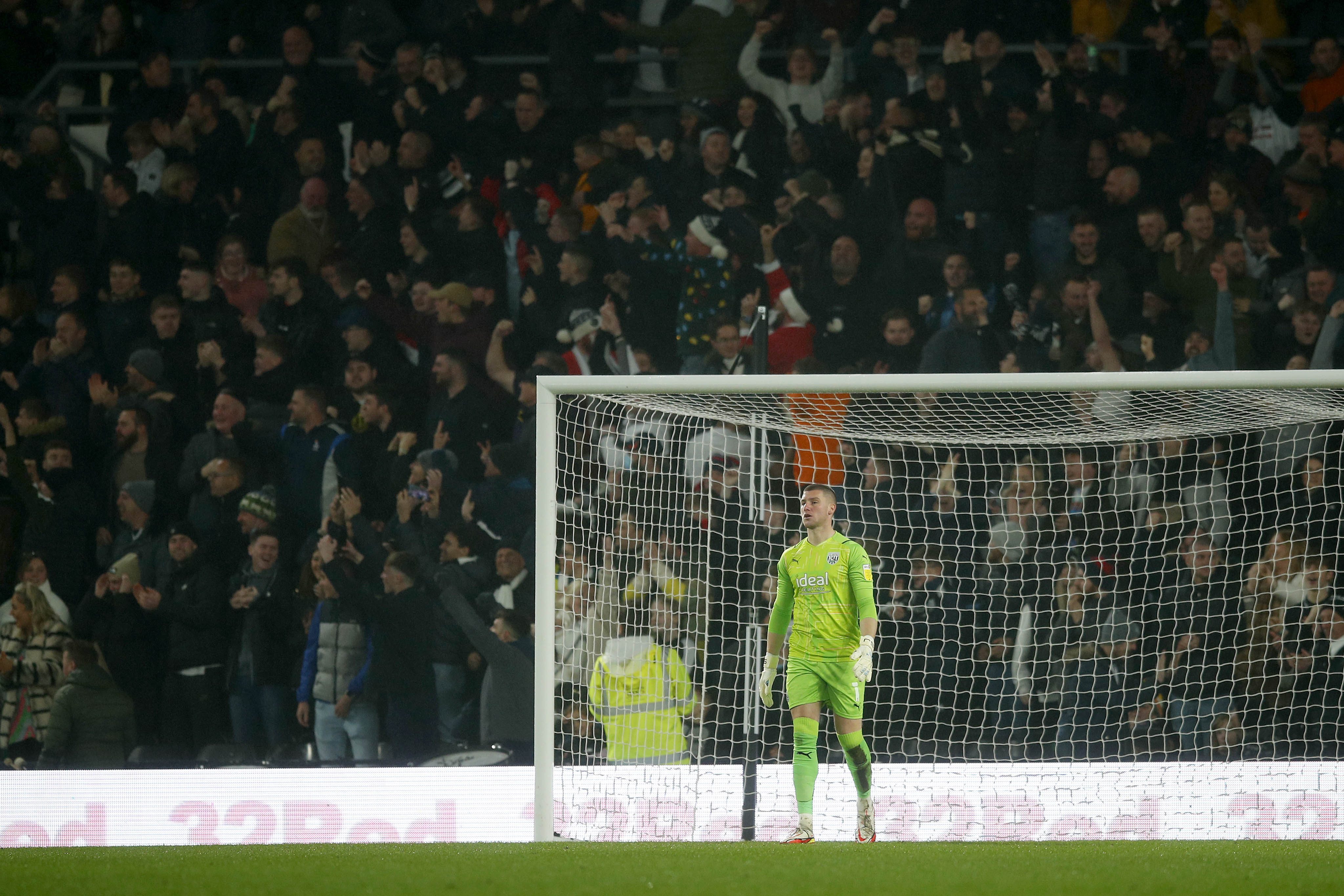
Moving to West Brom didn’t only bring holistic pressures upon the Englishman, however. Joining the Baggies was the first time in Johnstone’s career that he’d had to play a fully possession based style of football, but it added another string to his bow.
In fact, during the 2020/21 season, Johnstone outranked Ederson in his defensive actions outside the penalty area per ninety minutes - a measure of how effective a sweeper a goalkeeper is. Similarly, he attempted the third most passes of all top flight goalkeepers that season.
“That first year at West Brom, we had a great team and we should have gone straight up. Ironically, it was when we played some of our best football.
“With Darren Moore and Graham Jones, we played football. We passed it out and I struggled with that first. It actually wasn’t something I'd ever done before. I don’t think the style was very popular with our fans either so you felt under that added bit of pressure to conform to the style that the fans behind you might not have liked”, explains Johnstone.
Whilst the West Brom faithful may not have been the greatest proponents of the passing game, adapting to it and the atmosphere around it was another small step that has made Johnstone the goalkeeper he is today.
“Again, this was another learning. It can be hard at the time but then you become immune to it and get used to it and you improve. There were times when you’d give the ball to the opposition, or you’d kick the ball out of play. Maybe you’ve taken a touch and had to Cryuff turn or something because the striker’s got too tight. Again, you’re doing this in front of 25,000 people!
“It got to a point where I was having to be so relaxed with the ball at my feet that I’d struggle to bring my level back up and energise or concentrate to save a shot. A couple of soft shots would start to go in and it took time to adapt”, the 29 year old describes further. .
As they say, what you put in is what you get out. For Johnstone, the tough early days learning the possession game at the Hawthorns served him particularly well in the long run.
“Learning to play out was another little step, but it was really important. It helped me a lot when I joined up with England. When you go to a national camp and can use your feet on the same level as some of the other lads, you don’t look out of place.
“Graham Jones came to the EUROs with England and that was the first time he’d seen me play since he left West Brom. He was buzzing because he taught me how to play out - and he reminded me of it!
“In my career, I've had a lot of experiences on a smaller scale that have built me up for the bigger ones and stuff. Over the years, I’ve literally played every style of football at West Brom - going long, the sweeper keeper under Valérien Ismaël, and possession with Darren and Graham”.
*
“I think I knew I knew I had to get to the Premier League to have a chance of getting a call up to the England squad”, states Johnstone as we move on to talk about his experiences on an international level.
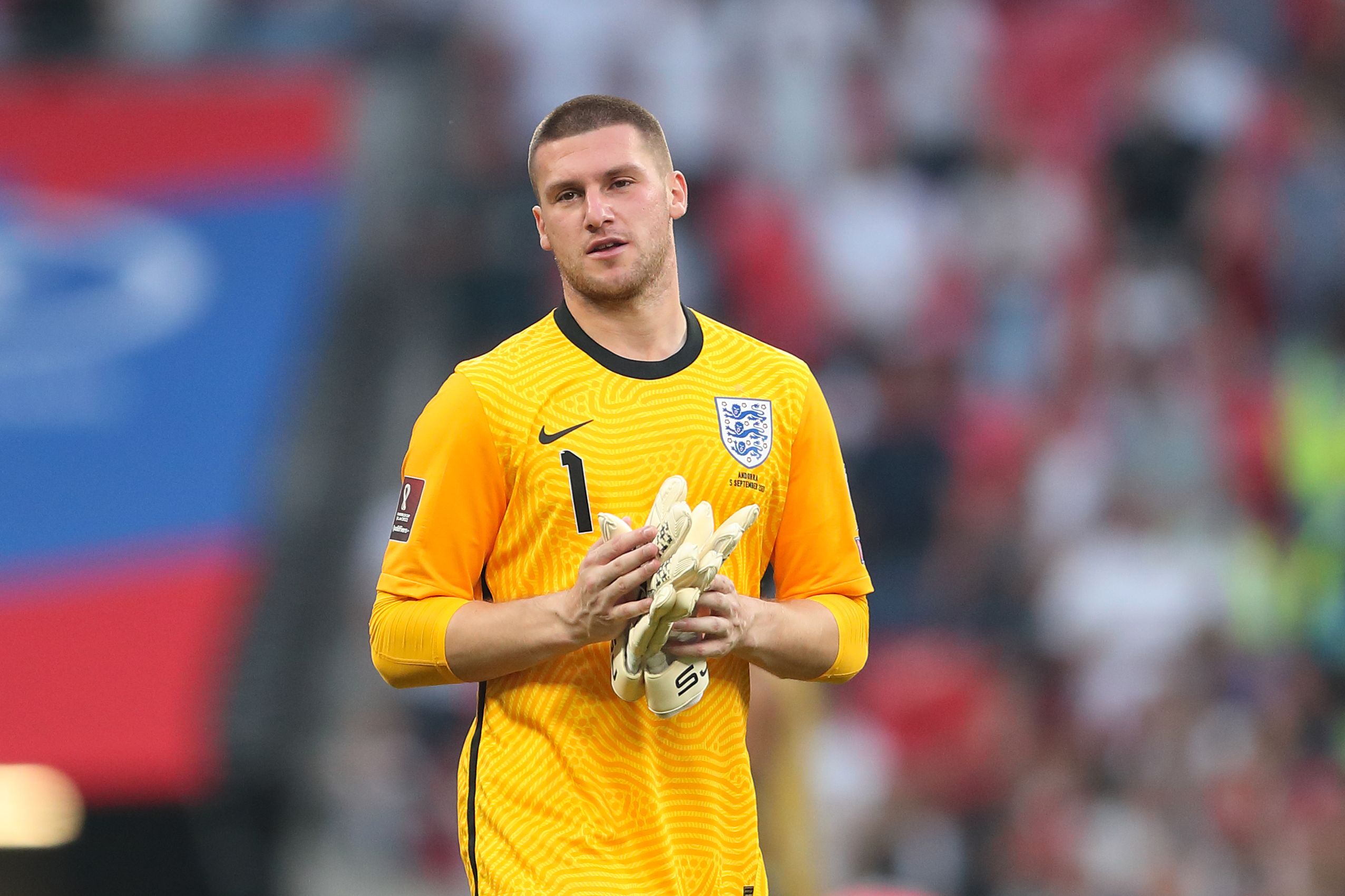
Johnstone had been a consistent face in the U21s squads, mentored by Martin Thomas at St George’s Park. Alongside (frequently) George Long, Jack Butland, Jonathan Bond and Marcus Bettinelli, only Johnstone and Butland have made senior appearances for the national team - with Butland’s last England appearance coming in 2018.
Yet, starting minutes in the U21s had evaded Johnstone, with Butland in the spotlight. Now, the tables have turned.
“Jack [Butland] was playing in the Premier League and doing really well. Jonathan Bond was getting minutes at the top end of the Championship with Watford. I was playing in League One on loan. I've definitely had to wait my turn. I got my chance only off the back of Jordan’s [Pickford] injury. But I had been working hard, playing well in the Premier League with West Brom, and I was ready”, says the 29-year-old.
“The training is of a higher level every day - you’re with some of the best players in the world. I’m not going to lie, going down the drive at St. George's, I was nervous! Even though I knew a lot of the players and staff from growing up in the youth squads, I had no clue what I was really walking into to be honest. But it was great. Getting the first session out the way was important, and then you can get used to the coaches’ philosophy and the atmosphere.
“Our goalkeeper coach [Martyn Margetson] was really good with me. He knew it was my first time in years coming up to the national team, and he helped me massively. Walking out at the Riverside against Romania was a strange feeling - everything that you’ve done in your career has led to this moment. Everything your family has done, your coaches have done, and you’ve done has come to this”, he explains.
“But when you’re there, making saves, it suddenly just becomes another game”.
*
With two Play-Off finals under his belt, drawing a combined crowd of over 130,000 fans, Johnstone is no stranger to pressure.
The mental and physical demands of playing football at an elite level are arguably unparalleled. The nature of the game and the meaning and emotion behind EFL Play-Off Finals especially is perhaps what makes the English game. The passion of fans across the football pyramid doesn’t wane.
To put into perspective the size of the crowds Johnstone played in front of in those finals, (85,000 who watched Aston Villa’s defeat to Fulham in 2018 and 48,000 who witnessed Preston’s promotion to the Championship in 2015), picture this:
The average person is estimated to meet anywhere between 10,000 and 80,000 people in their life. Imagine all of the people you’ve ever met in one place, watching you do something. Scary thought, right?
“The more people, the better the adrenaline! I know it sounds mad, and these are massive games. But once you're on the pitch, it really is just another game of football. At least that's how I see it”, explains the Englishman.
“To be honest, I think it's sometimes harder when you're not on the pitch. Because, when you're on the pitch, you're so concentrated on the game and what’s going on in front of you, everything else becomes a bit of a blur.
“The thing is, I’d been there with Preston a couple of years before on a slightly smaller scale, and then I’d spent time with Villa, got to Wembley then and the crowd was that bit bigger. And then, I got promoted with West Brom. All these little experiences are picked up along the years.
“It’s been a journey of lots of mini steps. It happens without you realising, but when you begin to connect the dots you can see how these experiences impacted each other”.
From Manchester United, to West Brom, and with England in between and now at Crystal Palace, the successes of Johnston’s career have often been the product of the sum of all the parts. But when he looks back on the early days surrounded by the likes of Ryan Giggs, Rio Ferdinand, and Wayne Rooney - under the guidance of none other than Sir Alex Ferguson - the memories are of the beginning of something great. Not a missed opportunity.
“When it comes to leaving United, it is what it is. I don't look back on anything there badly. They're a huge club, but I don’t have any regrets. I’ve played in the Premier League and I’ve played for England; it was great there, but it’s also great now”.
Long-form goalkeeping writing, delivered to your inbox. No spam. No outfield content. Just depth.
Tagged
Continue reading
The top goalkeeper news stories from 26th April - 3rd May 2026.German legend set to sign new contractBayern Munich legend Manuel Neuer is set to extend his current contract at the club despite now being 40 years of age. The German has played 596 games for Bayern, but reports suggest he may take a wage cut for the deal to logistically work. In the meantime, Neuer has a big Champions League semi-final ahead of him on Wednesday at the Allianz Arena as he eyes up a third German treble in his illustrious career.Also at Bayern, youngster Leonard Prescott - who was tipped to make his senior debut aged 16 in the Champions League this season - is rumoured to be in line for a new contract. Prescott's current deal expires in 2027, and Sky has reported that the German giants are keen to extend it. Liverpool to step into the goalkeeper transfer market?Last week, Freddie Woodman started for Liverpool against Crystal Palace and impressed the Anfield faithful. However, due to Alisson’s injury woes and Mamardashvili’s inconsistency this season, the Reds are reportedly exploring the goalkeeper market. One of the names that is linked is James Trafford, who has lacked minutes in the Premier League this season despite playing a significant role in Manchester City’s domestic cup runs. Could Liverpool secure the services of Trafford in the summer? Goalkeeper banned for 13 games following bizarre incidentLast week in LaLiga 2, Real Zaragoza faced SD Huesca in a game where things took an unexpected turn in the last few minutes. There were three red cards in added time, one of which was shown to Real Zaragoza goalkeeper, Esteban Andrada. Andrada was given a red card and then punched an opponent player in the face after receiving the dismissal. Since the game, the league has awarded Andrada a 13-game ban which will continue into next season. A bizarre moment in a bizarre game! Former Monterrey goalkeeper Esteban Andrada lost his mind and punched an opponent in the face after getting sent off. This happened in the derby between Real Zaragoza and Huesca in LaLiga 2. 🤯🇪🇸🇦🇷 pic.twitter.com/VHZ7ZNDt7X— All Fútbol MX 🇲🇽 (@AllFutbolMX) April 26, 2026 Manchester United set to sign another goalkeeper?Despite Senne Lammens' success as a Red Devil this season, Manchester United may be looking to swoop the signing of Dortmund goalkeeper, Gregor Kobel. Kobel has also been viewed as a potential successor to Thibaut Courtois at Real Madrid showcasing how sort after he is. The Swiss international has played in Germany for his entire senior career so a new challenge abroad could prove tempting. Carl Rushworth wins Championship golden gloveSaturday marked the final day of the Championship season, with the battle for the golden glove still alive between Coventry’s Carl Rushworth and Ipswich’s Christian Walton. Both sides managed to keep clean sheets as Coventry beat Watford 4-0 and Ipswich defeated QPR 3-0, gaining promotion back to the Premier League. As a result, Rushworth claimed the award with 17 clean sheets to his name. Finally, we end with our new segment, Stock RISING & Stock FALLING, where we mark the goalkeepers whose reputation we think has enhanced in the past week, and the goalkeepers who may be refraining from buying a newspaper on Monday morning...P.s. we are goalkeepers. we know what it's like to stand between the posts. This is just a bit of fun. All stocks will dip temporarily, and past performance is not an indicator of future success ;-). STOCK RISINGGeorge Wickens (Lincoln City)Lincoln City's League One winning goalkeeper George Wickens ended the season with an incredible 103 points, a League One trophy, and the joint-highest number of clean sheets in English football this season. What's more, With four assists, he matched former Manchester City goalkeeper Ederson for the most assists in a season by a goalkeeper in English football. Wickens shares the League One Golden Glove with Filip Marschall for 2025/26. Well in, George - enjoy the summer!With a League One winners medal and now the golden glove award, George Wickens says he has no regrets about joining the Imps.🎧 Hear more on Red Imps Club: https://t.co/6slNmaedzH pic.twitter.com/eSa0JOoTjU— BBC Sport Lincolnshire (@BBCSportLincs) May 3, 2026 STOCK FALLINGEsteban Andrada (Real Zaragoza)Following the aforementioned punch incident in La Liga 2, and Andrada's subsequent 13 game ban, it would be tough not to see the Argentine goalkeeper's stock tumbling this week. Both he and Zaragoza will be subject to financial penalties. It should be noted that Andrada has publicly apologised for the incident. Onwards and upwards.
Callum Turner analyses how one penalty save put Manchester City on a trajectory to stardom.Header image: Manchester City Football, at its best, is a microcosm of life. And like life, it’s full of moments - massive ones, like winning the Champions League or having your first child, and smaller ones, like taking a job you weren’t sure about, or turning up somewhere you almost didn’t go.But what we often forget, as we move through those moments, is how intrinsically linked they all are. Call it a butterfly effect, a golden thread, or some sort of universal inevitability - little things have a habit of becoming big things. Especially in football, where entire trajectories can hinge not on moments that create something new, but on those that simply stop everything from falling apart.Maybe you made a decision that didn’t feel like much at the time. Maybe it just kept things going. And only later did it become clear that it had done more than that.And maybe that 18-year-old from Mansfield Town set off a chain of events that would eventually lead to the rise of a modern footballing superpower. When Nicky Weaver arrived at Manchester City, the club was a long way from the global powerhouse we recognise today. This wasn’t a sleeping giant, but a fallen one. Bruised, battered, and disoriented after being repeatedly kicked down the English football pyramid.Just three years earlier, City had been relegated from the Premier League. Then, in 1998, they dropped into the third tier of English football for the first time in their history. Maine Road, home to title winners and European nights in the 60s, was now hosting fixtures against the likes of Macclesfield Town and York City. The fanbase, however, never faltered. If anything, it hardened. Attendances remained astonishingly high for the level, a mix of stubborn loyalty and a refusal to let the club drift into obscurity. There was gallows humour, and the growing spectre of “typical City” fatalism, but underneath it all, there was belief - or at least the desperate hope that something, anything, might change their trajectory.Joe Royle came in and decided the way out was with the youth. In goal, he placed his faith in a now 20-year-old Nicky Weaver, who didn’t exactly look like the typical saviour of a club in crisis. But over the course of that 1998–99 season, he became just that. Game by game, save by save, he gave City something they hadn’t had in years: reliability. It wasn’t the kind that transforms a team overnight, but it was the kind that stops things getting worse - the kind you can build on. English football has often been defined by chaos and inconsistency, and that only intensifies as you move further down the pyramid, even more so when you wind the clock back to the 90s. Happy Birthday to Nicky Weaver! 🥳💙 pic.twitter.com/Erkzb76eYD— Manchester City (@ManCity) March 2, 2023 Even in that context, Weaver was calm. His 26 clean sheets (a club record at the time) were a foundation. They kept City in games they might otherwise have lost, turned draws into wins, and slowly, almost imperceptibly, shifted the mood around the club.Supporters began to believe again. And that mattered, because the stakes couldn’t have been higher.By the time they reached the 55th game of a gruelling season, the Play-Off final at Wembley, everything hung in the balance. Winning could become the catalyst for climbing back up the leagues. Lose, and risk slipping into something far more permanent.And at the heart of it all was a 20-year-old goalkeeper whose job, all season, had been to stop the worst from happening.Wembley, May 1999. Over 70,000 people were in the ground that day watching a third-tier Play-Off final that, in the broader context of the game, didn’t register as particularly significant at the time. But for Manchester City, this was about direction. About whether this would be as low as it would go, or whether it was just a pitstop along a further slide into the abyss.For most of the afternoon, it looked like the latter.City were slipping. Two goals down, time running out, and that creeping sense in the stands that this was how it was always going to go.“Typical City.”When Kevin Horlock scored in the 90th minute, it didn’t feel like a turning point. This was long before last-minute belief became part of the club’s identity. There was hope, but it didn’t outweigh the sense of resignation.Then, in stoppage time, the ball dropped into the box awkwardly, unpredictably - the way it always seems to in these situations. It bounced, it hung just long enough, and Paul Dickov reacted.2–2.That’s the moment that lives on in most people's memories. The highlight that gets replayed whenever this game is mentioned. The knee slide celebration on all the photographs. And understandably so. Without it, there is nothing that follows.But it didn’t decide anything.Extra time passed in that familiar, suspended state, not football in the conventional sense but 30 minutes of extended, agonising tension. And then penalties.Five each. No rhythm, no momentum, just a sequence of moments placed side by side, each one heavier than the last.Gillingham stepped up first. Then City. Back and forth, each kick narrowing the margins, each one carrying a little more weight.Then Weaver intervenes.This celebration from Nicky Weaver!! 🤣👏What is your favourite play-off moment?— Sky Sports Football (@SkyFootball) May 17, 2023 He saves one. Then another. That’s all it takes. They take the shootout 3–1, and just like that, what had been slipping away all afternoon is dragged back.Teammates pile on top of him, the crowd spills over itself, and,City are going up.At the time, it didn’t feel like the beginning of anything, just a moment of success to savour following difficult years. Because that’s often how football works. It isn’t always defined by the moments that start something new. More often, it’s shaped by the ones that prevent something from ending. And that’s the role of a goalkeeper, more than anything else - not to create the final product, but to create something to build on. What followed wasn’t immediate, and it wasn’t linear. There were still setbacks, still seasons spent finding their level again, still reminders that nothing in football moves in a straight line for long. But City were moving. Within a year they were back in the First Division, two years later in the Premier League, and less than a decade on, new ownership would arrive and alter the scale of everything that followed. It’s easy now to draw a golden thread through all of it, to connect that save at Wembley directly to league titles, to Champions League nights, to everything City would become.But football doesn’t really work like that. What it does have are moments that quietly decide which direction a club moves in next.This was one of them.If that penalty goes in, maybe City still come back. But just as often, they don’t. Clubs stall. They drift. They slip into obscurity.City didn’t.And somewhere in that, there’s a 20-year-old goalkeeper from Mansfield Town, signed without much noise in 1997, who spent a season doing the unremarkable things well enough to stop everything slipping away, until one moment asked for something more.He made a save.At the time, it felt like survival.Years later, it looks like something else entirely.
The top goalkeeper news stories from 19th April - 26th April 2026.Real Zaragoza goalkeeper apologises after outburstPerhaps the strangest story of the weekend comes from Spain. Real Zaragoza goalkeeper Esteban Andrada is facing serious disciplinary action following an extraordinary sequence of events in a heated Segunda División derby against SD Huesca. The Argentine received a second yellow card for pushing a Huesca player in stoppage time, but rather than leave the pitch, he sprinted towards Huesca captain Jorge Pulido and punched him in the face. The incident sparked a brawl, with Huesca goalkeeper Dani Jiménez and Zaragoza's Dani Tasende also being sent off. Huesca won the match 1–0 thanks to an Óscar Sielva goal, though both sides remain in the relegation zone with five games to play.Declaraciones de Esteban Andrada pic.twitter.com/OYeQujPs2k— Real Zaragoza (@RealZaragoza) April 26, 2026 Andrada, 35, who has four caps for Argentina and is on loan at Zaragoza from Mexican club Monterrey, subsequently issued a public apology, admitting he 'lost focus' and would accept whatever punishment the league sees fit. Zarazgoa Head coach David Navarro simply stated 'There are lines we can't cross.'Freddie Woodman starts first game of the seasonAfter Giorgi Mamardashvili suffered an injury blow in the Merseyside derby and Alisson Becker continues to recover from a muscle injury, Freddie Woodman started his first Premier League game at Anfield, and made his first Premier League start for Liverpool. The former Newcastle United and Preston North End goalkeeper made several key saves in front of the Anfield faithful and helped secure all three important points in Liverpool's pursuit of Champions League football. Come on, Freddie, don’t be shy 😆👏🏽🧤 pic.twitter.com/fzXEAvQ7N9— Goalkeeper.com (@goalkeepercom) April 25, 2026 Following the match, Woodman explained how 'it was an incredible moment for me. I didn't think I would play at Anfield in a Premier League game when I joined this club.'Antonín Kinský keeps clean sheet as Spurs grab winTottenham Hotspur travelled to Molineux on the weekend in pursuit of their first Premier League win of the calendar year. Spurs went into the game on a 15-game winless streak, leaving them lingering in the relegation zone. Antonín Kinský started in goal after featuring in the previous two matches. The Czech goalkeeper made two saves, one of which was a last-minute free kick aimed for the top right corner. His vital contributions helped Spurs win the game 1–0, ending their miserable run without a victory.Antonin Kinsky is your Player of the Match following his 🔝 performance and clean sheet against Wolves 👏📈 @HSBCSport pic.twitter.com/7wQzjpKkTg— Tottenham Hotspur (@SpursOfficial) April 26, 2026 Arsenal keep clean sheet as Raya edges towards awardArsenal hosted Newcastle United at the Emirates Stadium last night in their push for the title. The Gunners managed to hold on for a 1–0 win, giving David Raya his 16th Premier League clean sheet of the season. The Spaniard is now three clean sheets ahead of Paris Saint-Germain's Gianluigi Donnarumma as he looks to claim his third consecutive Premier League Golden Glove. Will Raya retain his title as the best goalkeeper in the league?James Trafford says this season has been a 'big learning experience'Yesterday, James Trafford made his second Wembley appearance of the season as Manchester City beat Southampton in the FA Cup semi-final. Minutes have been hard to come by for the talented English goalkeeper this season following the arrival of Gianluigi Donnarumma. The Manchester City academy graduate said in a recent interview that this season has been a "big learning experience" and that his return to the club "hasn't been the best possible outcome." That being said, and despite his struggles earlier in the year, he could still end the season with a domestic treble in which he would have played a significant role."It has obviously been very up and down throughout the season because I haven't played too much and obviously I had a decision to make in the summer," Trafford told BBC Sport. "Everyone always thinks when you make decisions [for] the best possible outcome and obviously it hasn't been the best possible outcome, but I have just tried to either improve every day and just try and stay positive, try and stay happy. "Because throughout the year it has been such a big learning experience so the main thing I didn't want is for it to impact your general happiness and your general feeling. I have had to learn a lot throughout the year and I have just tried to work as hard as I can and try and improve and win the day."Brighton explore new goalkeeper optionWith Bart Verbruggen potentially leaving Brighton and Hove Albion this summer, the club may be looking to sign a new goalkeeper ahead of next season. They, along with several other clubs, have been linked with Noah Atubolu of SC Freiburg. The German has an good Bundesliga record, becoming the only goalkeeper in the competition's history to save five consecutive penalties. However, James Trafford is also reportedly on Brighton's list - and Carl Rushworth, recently winning promotion to the top flight with his loan side Coventry City, is also an option.
Leaving a club that you’ve been with since the age of 14 is a big step for any player, yet Stevenage's Filip Marschall is already reaping the rewards of doing just that.Now 22 years old, Marschall progressed through Aston Villa’s academy, going on to win the FA Youth Cup before making an “unforgettable” first-team appearance in front of a “hostile” crowd at HSK Zrinjski Mostar in the Conference League.He also went out on two loans to Gateshead, where he learned about “being accepted into a team” before temporarily joining MK Dons and Crewe Alexandra. The last of those loans was particularly impressive, as he kept League Two’s joint-third highest tally of clean sheets for the season with 16.Those loans are what Marschall feels were the most important part of his development. “I probably wasn't as good as other goalies my age at that time, when I was around 18, but one thing I'm really thankful for was Villa pushed me to go out on loan,” he tells Goalkeeper.com.“By the time I was 19, 20, 21 I'd had so many games under my belt, been in changing rooms with experienced players, knew what three points meant, fought for things, had a promotion,” he continues. “I think there are a lot of goalies that are a similar level technically across the country, but when it comes to playing those matches, the main thing is what's in your head and I definitely think the experiences I've had have helped me in that regard.”While on loan, Marschall also realised early on that “defending the box and being dominant in the box” was a strength of his. In addition to further building on that area of his game, he also had to work on kicking the ball long from his hands “because it wasn't something I was really used to doing at an academy level”, while also making sure he could meet the demands physically and with his concentration.That all stood him in good stead to make a permanent move from Villa Park to Stevenage in the summer. While admitting there were “mixed feelings” due to the amount of time he had been with the Villans, there was a realisation “that if I was to play in League One and higher, it would have to be a permanent move”.“I was ready to find a new home and not have that comfort of a Premier League giant behind me that I always had there", recalls Marschall."It was time to make a step I was ready for. I was ready to find a new home, ready to take that risk.”Top start 💪🏼⚪️🔴 @StevenageFC pic.twitter.com/zSI91hrpqs— Filip Marschall (@filipmarschall) September 3, 2025 Despite Marschall having conversations with other clubs, Alex Revell’s influence ensured he joined The Boro. “Within five minutes, I knew I was going to sign for Stevenage because of the confidence he seemed to have in me, what he was telling me about the club, about the team, what he sees for me personally as well,” the young goalkeeper explains.Revell’s confidence in his team and new goalkeeper has proven to be well-placed. At the time of writing, Stevenage occupy the final Play-Off spot with two games to play, sitting a point ahead of seventh-placed Luton Town, with Marschall recording a joint-league high tally of 18 clean sheets that even the man himself admits is “an incredible amount”.The possibility of beating Lincoln City’s George Wickens to the Golden Glove “springs to mind” now, despite not being something that he thought about earlier in the season. “The most important thing is the team, but if I do my job and hopefully keep clean sheets then obviously the team's results take care of themselves as well,” he says.The Stevenage goalkeeper also gives credit to his teammates and specifically the defence, which includes League One Team of the Season’s Charlie Goode, when referencing the club’s impressive defensive record. “We understand each other, we're on the same page with regards to how we play. If we've got a high line, they know I'll be behind them trying to sweep up. Likewise, if there's crosses going in the box we know where each other are,” he says. “I've got an incredible set of defenders in front of me, and as the season has gone on we've grown more and more as a unit, understood each other more, and we're obviously much better for it as the results have shown.”On a personal level, Marschall could also be enjoying the benefits of turning out for a club he is permanently contracted to. He shares that it can carry more of a “homely feel” than being out on loan, adding “Maybe it helps with the fans as well, because you are their player. I suppose it helps you feel more settled, which then gives you a bit more confidence and makes you feel at home, which then translates to better performances on the pitch and being consistent.”While the goalkeeper suggests his season has been more about achieving a “consistent good level” than highlight moments, he is able to pick out the sort of performances that have endeared him to Stevenage’s supporters. The 22-year-old rather modestly states that he felt he “contributed to” a 1-0 win over Bradford City having made two superb saves to deny headers. He also references home matches against Luton and Exeter City as “big wins for us that I felt I did well in”. There was also a penalty save against Jordan Clark at Kenilworth Road, but Marschall says “it's hard to put that as a real highlight” due to the game resulting in a defeat.Filip. Marschall. pic.twitter.com/FzyH52abdU— Aidan (@acheevers6) April 11, 2026 Even with those mentions, there is little time to dwell on past games due to the EFL’s relentless schedule at this time of year. That was evidenced in the space of a week recently, as Stevenage’s heaviest defeat of the season was followed by a draw against a Lincoln side confirmed as champions, then a clean sheet and victory against Barnsley.“We love the games coming really quickly,” Marschall admits. “There's nothing worse than just waiting and thinking about the previous result. Whether it's good or bad, you just want to play the next game.”Stevenage will be doing just that as they travel to Doncaster Rovers before hosting Wigan Athletic on the final day, with a Play-Off place in their own hands.Marschall enthuses that “it’s been incredible” being involved in his side’s push for the top six. “Not many people would have had us up there at the start of the season, which makes it better, in a way,” he continues. “That's what you play football for, to play these kinds of seasons where you're all fighting for something. Each game is exciting. Each game feels really big. This is what you want to be a part of.”While some could already be thinking about the prospect of promotion, the Stevenage goalkeeper's thoughts are firmly set on qualifying for the Play-Offs, as “that in itself would be an amazing achievement”.Although he adds: “Obviously we want to go all the way. There's a lot of belief in our changing room, in the club, that we can do it. So that's going to be the aim. It would mean everything. It's my first season in League One, to potentially get the play-offs and the chance to go up if that was to happen, I couldn't ask for much more.” As the man himself puts it: “I don't think it could be understated how big an achievement that would be.”